
Delimitation part of rigging August 13 polls – Dr Mwelwa
 Moses
Moses

Delimitation part of rigging August 13 polls – Dr Mwelwa
Content Type: Free
By NATION REPORTER
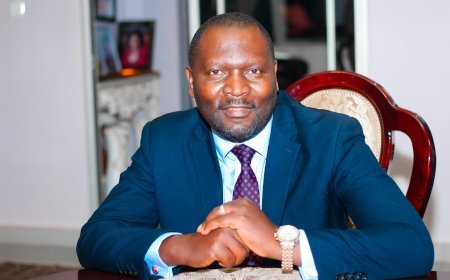
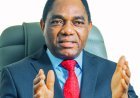
ACADEMICIAN Dr Lawrence Mwelwa has alleged that the recent delimitation of constituencies is a calculated move by the ruling UPND to influence the outcome of the August 13 general election.
Dr Mwelwa said while the expansion of constituencies from 156 to 226 appeared progressive on the surface, the process could fundamentally alter how votes translate into parliamentary seats.
“There are moments in the life of a nation when democracy is not overthrown by tanks, but quietly re-engineered. Zambia’s 2026 general election may well represent such a moment,” Dr Mwelwa said.
He said the creation of 70 new constituencies had reshaped the electoral framework in ways that many citizens had not fully questioned.
“At the heart of this transformation lies constituency delimitation. It may look technical, but whoever controls how wards are grouped into constituencies controls how votes are converted into seats,” Dr Mwelwa said.
He cited analysis based on the 2021 election results, which he said suggested that a party with about 49.8 percent of the vote could secure between 130 and 140 seats out of 226 under the new boundaries - far above proportional representation.
“In simple terms, the map converts a competitive election into a structurally tilted one,” Dr Mwelwa said.
He explained that electoral manipulation could occur through techniques known as “packing” and “cracking,” where opposition voters are either concentrated into a few constituencies or spread thinly across many to reduce their chances of winning seats and so the new constituency boundaries appeared to apply both strategies.
“In Eastern Province, opposition parties command around 30 percent of the vote, which should ordinarily translate into representation. But projections indicate they may not win a single seat. The votes exist, but they are fragmented in a way that prevents victory,” Dr Mwelwa said.
He said a similar pattern could be observed in Northern Province, where significant opposition support may not result in proportional representation.
Dr Mwelwa also said while national statistics might suggest fairness, underlying provincial distortions could be masked by counterbalancing effects in other regions.
“At the aggregate level, the system may appear balanced, but that is the illusion. The distortions are deliberately offset to conceal structural inequality,” he said.
Dr Mwelwa warned that such a system could create a “durable advantage,” giving the ruling party a sustained edge even if voter preferences change.
“This is not just about winning one election. It creates a built-in advantage that can persist over time,” he said.
Dr Mwelwa said the implications could extend beyond electoral outcomes to constitutional governance, particularly if the ruling party attains a two-thirds parliamentary majority.
“In Zambia, a two-thirds majority allows for constitutional amendments. The question is not just who wins, but what kind of democracy remains afterwards,” he said.